Engineered Control from Polymer to Finished Fabric
At Quantum, vertical integration isn’t a buzzword — it’s the foundation of how we engineer performance, consistency, and speed.
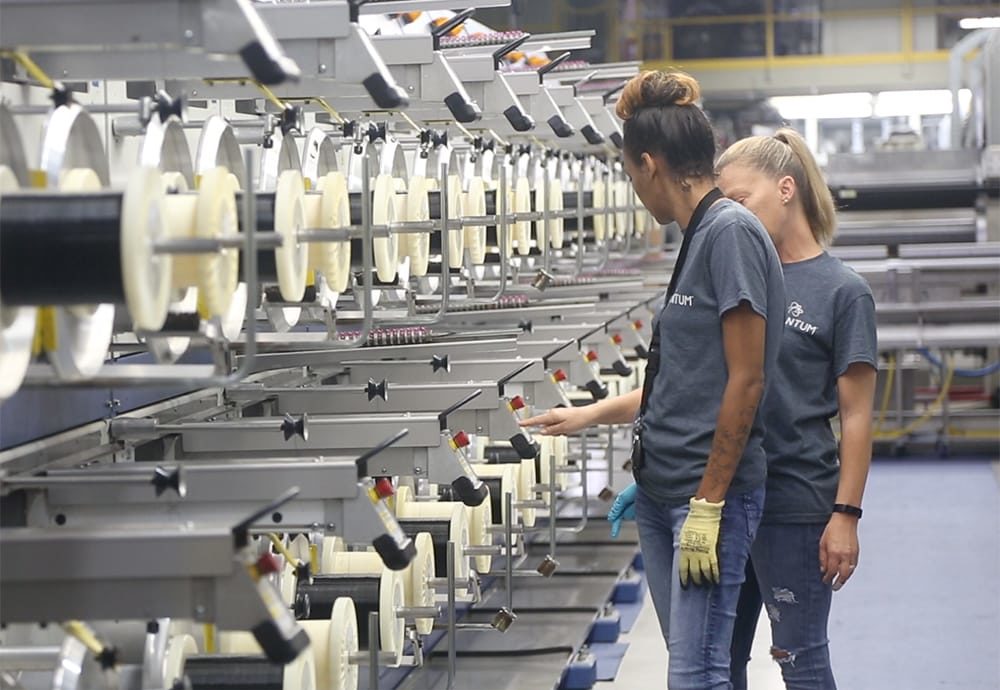
With the exception of base resin and masterbatch pellets, Quantum controls nearly every step of the manufacturing process, from yarn extrusion through finished fabric inspection and packaging. This end-to-end control allows us to engineer materials at the polymer, yarn, and fabric level, eliminating variability that most textile manufacturers simply accept as unavoidable.
For customers who require tight tolerances, rapid development cycles, and repeatable performance at scale, vertical integration isn’t optional — it’s essential.

What Vertical Integration Means at Quantum
Quantum’s manufacturing platform is designed to keep material decisions in-house and under control at every critical stage.
Our vertically integrated flow includes:
- Polymer selection and extrusion (mono, multi, and hybrid yarns)
- Yarn processing, including texturing and twisting
- Warping and customized beam preparation
- Weaving on proprietary and highly modified looms
- Inline bonding, fusing, and finishing
- Calendaring and secondary processing
- On-loom and off-loom inspection
- Final quality control, traceability, and packaging
This structure allows Quantum to align material behavior, aesthetics, and mechanical performance with real application requirements — not supplier constraints.
Built Over Two Decades of Hard Lessons
Quantum’s vertically integrated model was not built overnight.
More than 20 years ago, our team experienced the limitations of relying on external yarn suppliers:
- Color inconsistency
- Long lead times
- Massive minimum order quantities
- Broken exclusivity agreements
- Limited willingness to customize
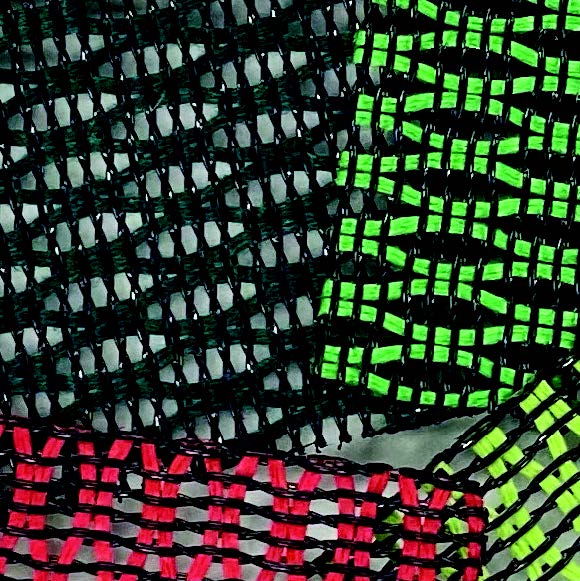
The first multifilament extrusion line was added to solve a single problem — control. As customer demands increased and applications became more performance-critical, additional multifilament and monofilament lines were added. Hybrid yarn capabilities followed, along with expanded weaving, finishing, and inspection operations.
Today, Quantum’s vertical integration reflects years of intentional investment driven by real manufacturing pain points, not theoretical efficiency models.
Why Vertical Integration Matters to Your Program
Consistent Quality Starts at the Yarn
Externally sourced yarn is responsible for the majority of textile defects across the industry. By controlling yarn extrusion internally, Quantum eliminates an estimated 98–99% of variability and defects typically introduced upstream.
This results in:
- Higher fabric strength
- Exceptional repeatability
- Long-term color stability
- Predictable mechanical performance
For suspension-critical and structural applications, this control is non-negotiable.
Vertical integration allows Quantum to dramatically compress development and production timelines.
In many cases:
- Concepts discussed in the morning become woven prototypes the same day
- Development programs move from idea to validation without external delays
- Production orders can ship within days, not weeks
Customers often describe the experience as working with a pilot line that scales, rather than a rigid production facility.
Because Quantum does not rely on outside suppliers with high MOQs, we can support:
- Extremely small development runs
- Iterative testing without financial penalties
- Color and construction experimentation
- R&D programs that are cost-neutral or cost-positive
This flexibility enables innovation that competitors avoid due to waste, cost, or complexity.
By keeping extrusion, weaving, finishing, and inspection in-house, Quantum removes several layers of supply chain exposure. This is especially critical for:
- Color-critical programs
- Long-life product platforms
- Mission-critical or regulated applications
- Domestic and Berry-compliant supply needs
Vertical integration reduces reliance on external consolidation trends and protects continuity over the life of a program.
Quantum maintains full material traceability for suspension-critical and performance-driven products.
Our quality system includes:
- On-loom inspections
- Off-loom inspections
- Documented quality checks
- Inspection reports available upon request
While we protect proprietary processes, we provide customers with meaningful transparency into how materials are produced, inspected, and controlled.
Quantum’s vertical integration is supported by a deeply collaborative culture. Teams work cross-functionally, with individuals often wearing multiple hats — a necessity when flexibility and speed matter.
This culture, shaped by decades of creative problem-solving and risk-tolerant leadership, enables Quantum to do what many manufacturers cannot: adapt quickly without sacrificing control.
Quantum’s vertically integrated platform supports both low-volume development and high-volume, mission-critical production.
Customers rely on us for:
- Tight lead-time windows
- High reliability at scale
- Domestic-controlled manufacturing
- Long-term sourcing stability
This makes Quantum a strong fit for applications requiring repeatability, accountability, and program longevity.
Sustainability Through Fewer Hand-Offs
While we do not publish formal sustainability metrics, vertical integration inherently reduces environmental impact by:
- Eliminating transportation between suppliers
- Reducing waste from excess MOQs
- Minimizing rework caused by upstream defects
Fewer hand-offs result in fewer inefficiencies — both operationally and environmentally.
Is Vertical Integration the Right Fit for Your Application?
Vertical integration matters most when:
- Performance requirements are tight
- Variability is unacceptable
- Speed and flexibility are critical
- Customization is unavoidable
- Long-term consistency matters
If your application demands more than a catalog solution, Quantum’s vertically integrated manufacturing platform may be the difference between compromise and success.
Let’s talk about what control could unlock for your program.